Personal Chef

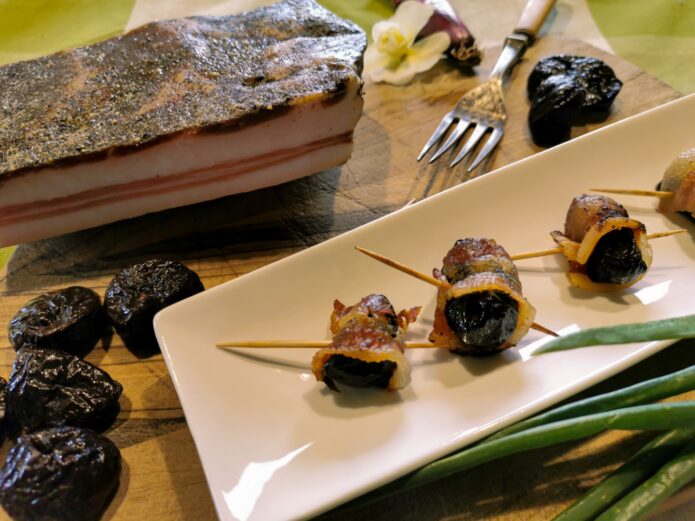
Diavoli a Cavallo

Ingredients for 4 people:

  • 12 dehydrated and pitted plums
  • 12 slices of bacon
  • 12 toothpicks

Cooking tools:

  • Baking tray
  • Baking paper

Method:

  1. Wrap each plum with a slice of bacon and secure it with a toothpick. It is recommended to use only one layer of bacon to achieve a nice, crunchy texture. Arrange the wrapped plums evenly spaced on a baking tray lined with baking paper.
  2. Bake in a preheated oven at 200°C (400°F) for 10 minutes. These appetizers are enjoyable both warm and cold. They can be prepared in advance, stored in the refrigerator, and reheated just before serving.

One of the most frequently requested appetizers by our Personal Chef is definitely the Diavoli a Cavallo. These savory bites are always a crowd-pleaser! To enhance the dining experience, we often serve them with our very own Petalo di Rosa rosé wine. The wine’s floral notes and crisp finish complement the rich, smoky flavors of this classic dish.

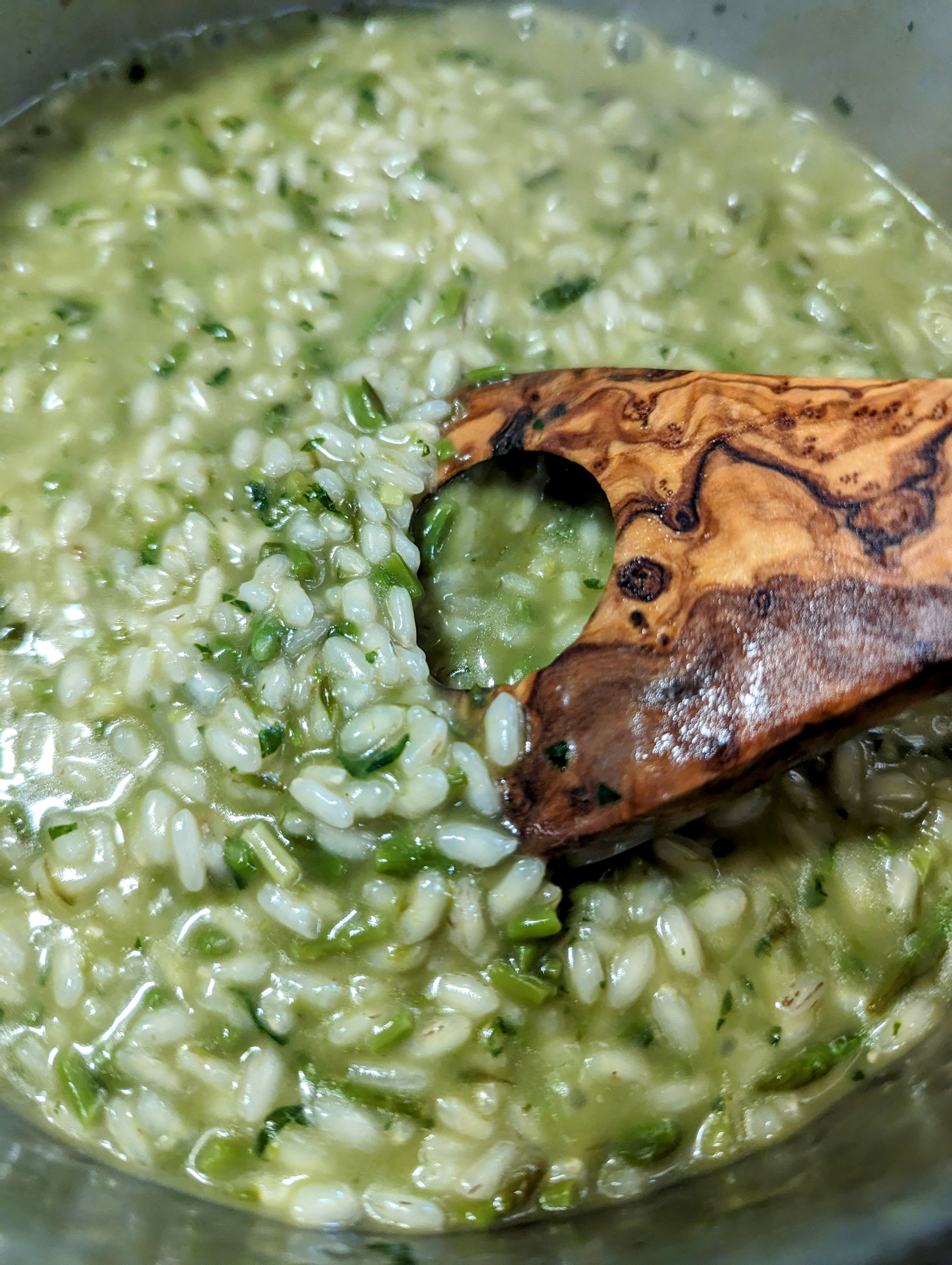
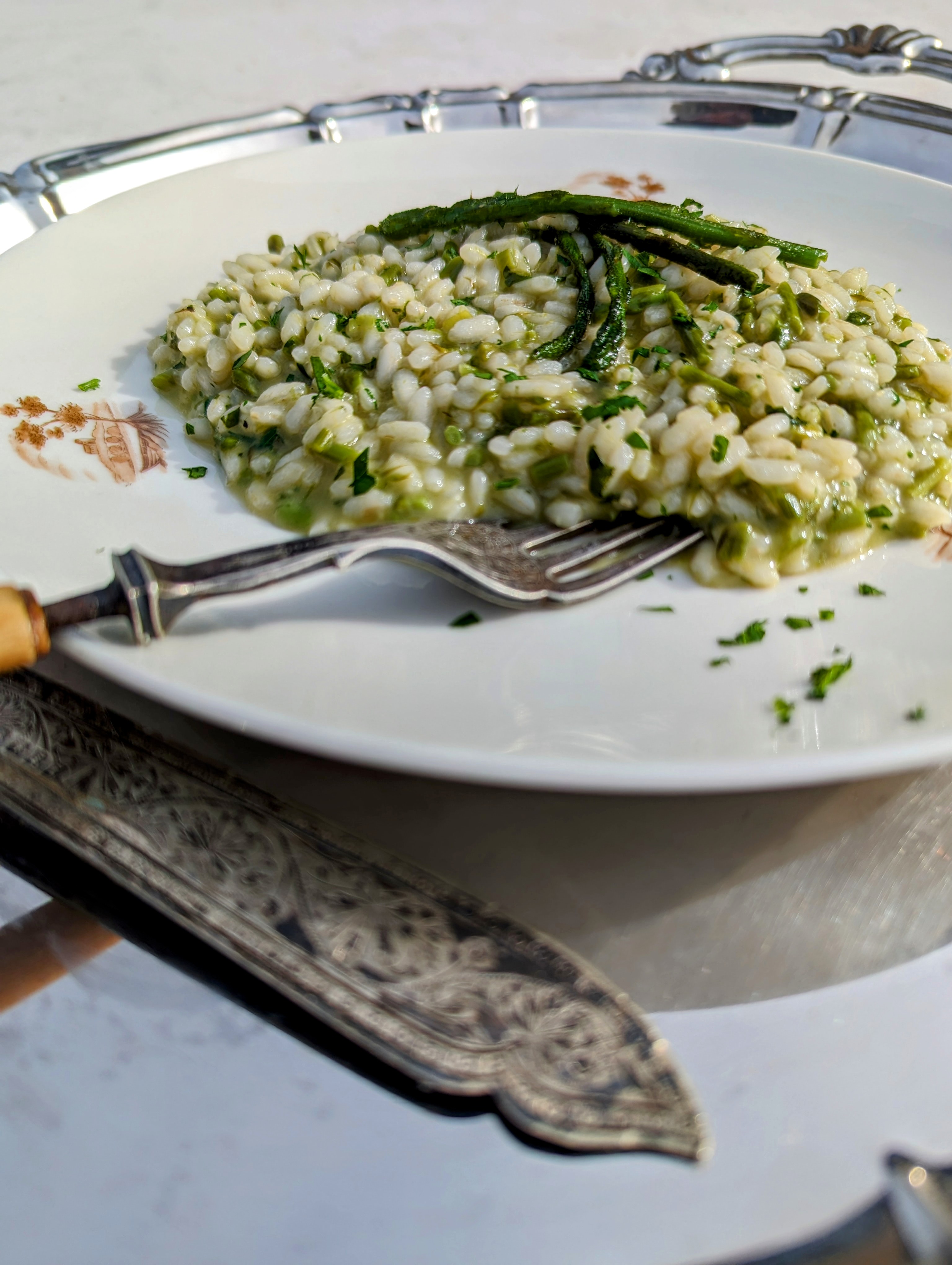
Risotto di Asparagi Selvatici

If you want to learn how to cook with our family, come visit us in Tuscany!

Ingredients for 4 people:

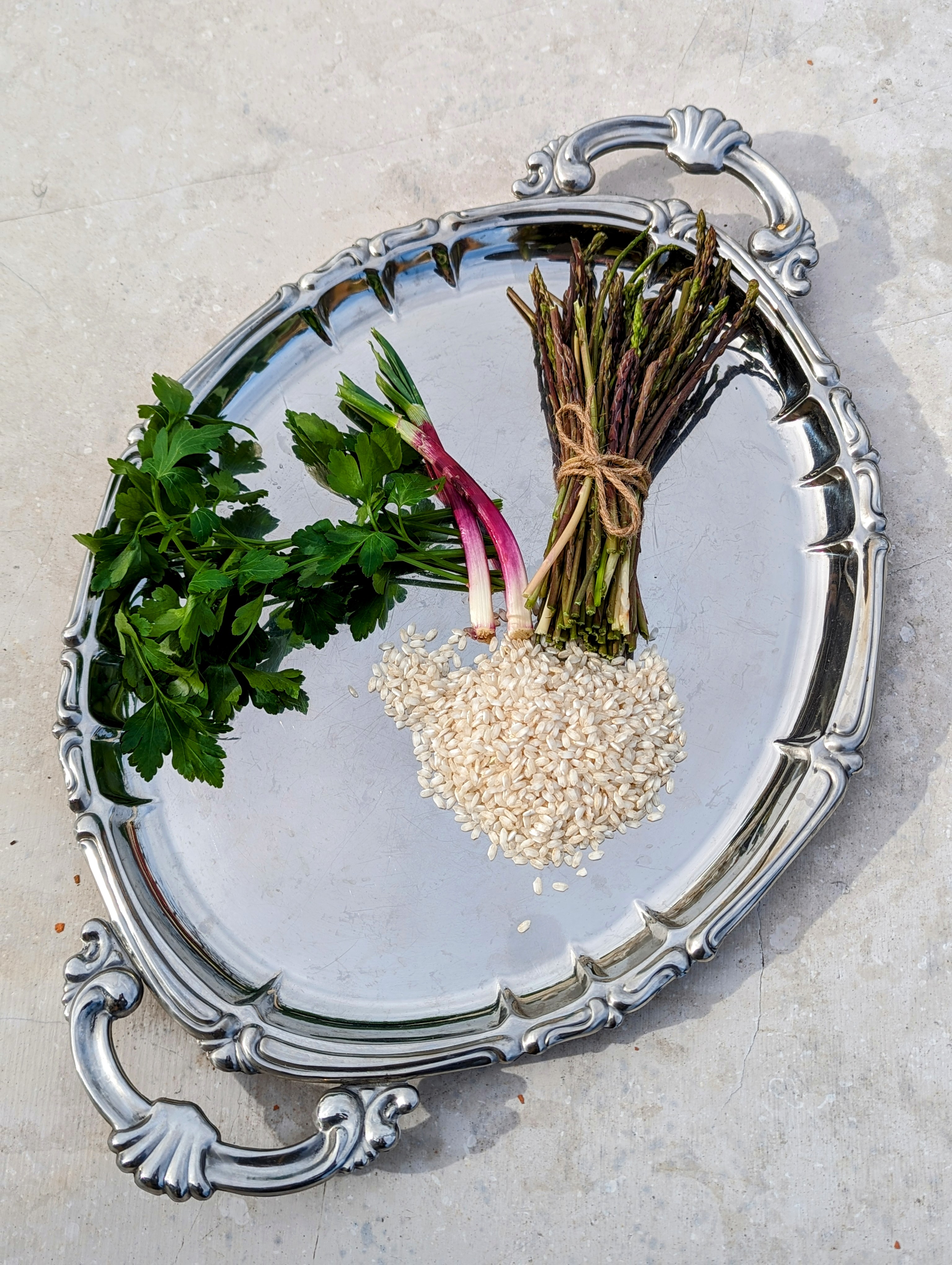
  • 200 grams wild asparagus
  • 2 shallots (small)
  • Four hands full arborio rice
  • 2 tablespoons Parmigiano-Reggiano
  • 1 tablespoon butter
  • 1.5 liters vegetable broth
  • 3 tablespoons extra virgin olive oil 
  • Pinch of salt
  • Pepper

Risotto ingredients

What you need:

  • Pan with a bottom for even cooking
  • Small pot for vegetable broth
  • Ladle (we use the perforated risotto ladle, available here)
  • Cutting board
  • Knife
  • Spoon
  • Cupped ladle

Before You Begin:

  1. Fill the small pot halfway with water. This water will be used for the vegetable broth.
  2. Add the discarded asparagus and shallots to the pot.
  3. Bring it to a boil for a few minutes.
  4. Use the vegetable broth when cooking the risotto.


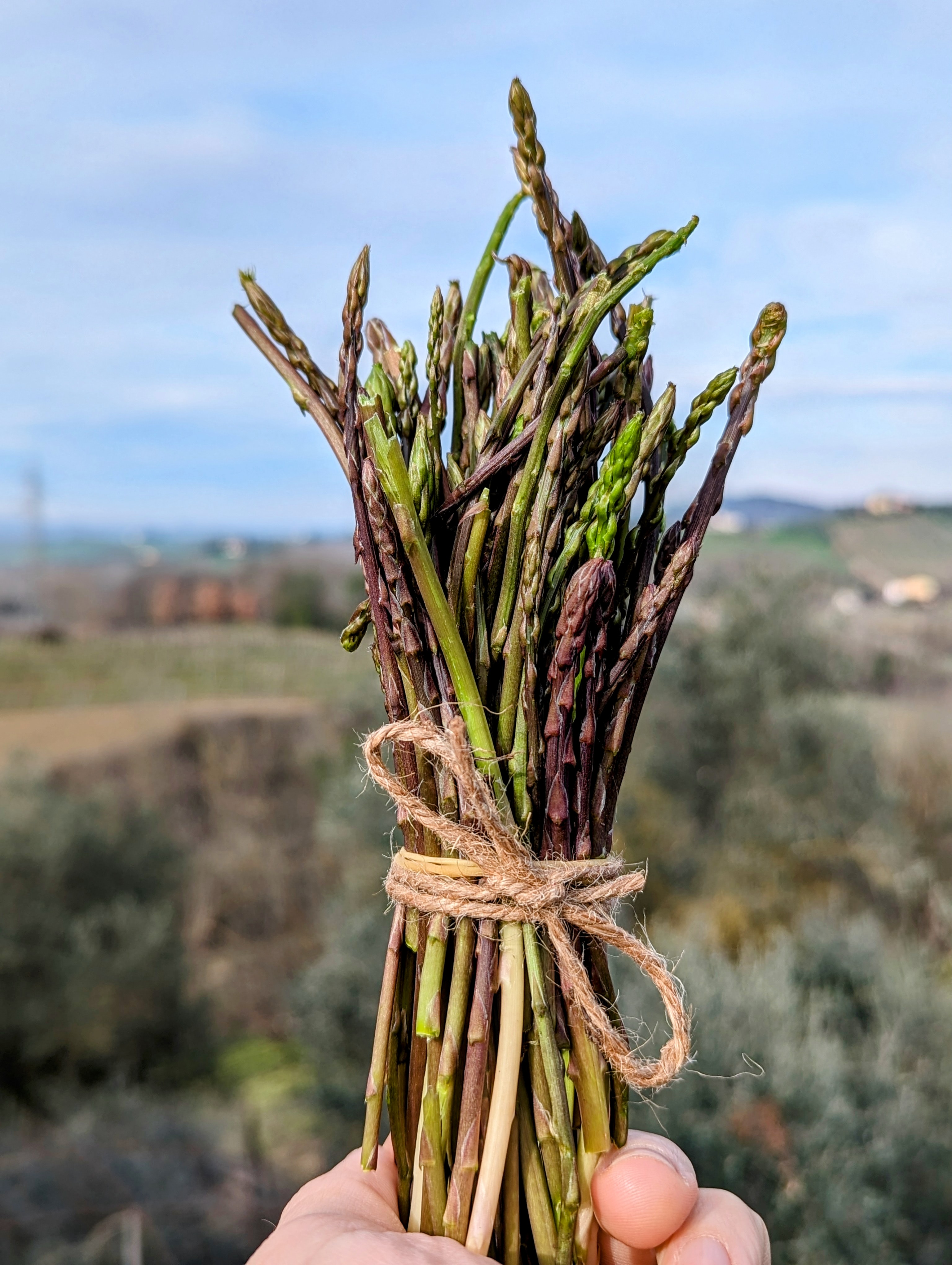
Asparagus

Method for Asparagus Sauce:

  1. On a cutting board, finely chop the shallot in the tender part and put it in a pan at room temperature. Add extra virgin olive oil (2 tablespoons) and a pinch of salt to the pan.
  2. Next, separate the asparagus from the woody base, using only the tender part. To separate the two parts, apply light pressure starting at the base and moving towards the tip until the asparagus breaks in half at its tender point.
  3. Set aside the woody part of the asparagus for the vegetable broth. Cut the asparagus into slices, leaving the tips intact for decorative purposes.
  4. Sauté the shallot for a few seconds and add the asparagus to the pan. If necessary, add vegetable broth to the pan.
  5. Cook the asparagus for 4-5 minutes until it is tender.
  6. Taste the asparagus to ensure it is cooked to your liking. Season with salt and pepper.

Method for Risotto

  1. Take another pan and add rice and a tablespoon of oil to it. Turn the heat to medium and toast the rice slightly.
  2. Stir the rice in the pan, ensuring it does not burn, to achieve an al dente and well-cooked risotto. When the rice grains have developed a glossy appearance and the white core has disappeared, it is ready to begin cooking.
  3. Begin by adding vegetable broth, followed by the asparagus sauce. Allow the mixture to simmer for approximately 20 minutes, adding broth as needed to prevent it from drying out.
  4. Once the risotto is fully cooked, incorporate cream, turn off the heat, and add butter and Parmesan cheese. Stir the risotto thoroughly to ensure even distribution of the ingredients. Allow the risotto to rest for a minute before serving.

Note: Plate the risotto on a deep plate and garnish with a small portion of asparagus.

asparagus risottoMore photos of the risotto on our Instagram page

Torta con L’Uva

Ingredients:

  • 2 eggs
  • 7 Tbsp. Sugar (175 gr)
  • 7 Tbsp. Milk (140 gr)
  • 7 Tbsp. Sunflower oil (100g)
  • 16 Tbsp. Flour “00” (400 gr)
  • 1/2 baking powder (8 g)
  • Nuts (100 gr)
  • Black Grapes (500 gr)

Method:

  1. Carefully combine all ingredients in a bowl. Transfer the mixture to a baking sheet lined with parchment paper.
  2. Preheat the oven to 180°C (356°F). Bake the cake for 30 minutes.
  3. During the last 15 minutes of baking, brush the cake with sunflower oil and sprinkle the top with granulated sugar. Continue baking until the cake is fully cooked. Serve the cake with powdered sugar.


ENJOY 🙂

If you missed our best photos from this article you can find them here on the Cooking Family Instagram

Pici al Ragu

Ingredients for 4 people:

Pasta:

  • 200g four 00 type pasta
  • 100g water or 2 large eggs
  • 2 tablespoons olive oil and 1 pinch of salt

Sauce:

  • 400g ground beef
  • 2 pork sausages
  • Half red onion
  • 1 sprig parsley
  • 2 cloves of garlic
  • 1 celery stalk
  • 1 small carrot
  • 2 bay leaves
  • 6 tablespoons olive oil
  • 1 bottle tomato sauce
  • 3 pinches of salt, black pepper
  • Half glass of red wine

What you need:

  • 1 pot for cooking pasta
  • 1 pot for cooking the meat sauce
  • 1 board for kneading pasta
  • 1 cutting board
  • 1 Knife

Method for the meat:

  1. Begin by chopping all the vegetables, excluding the bay leaves. You can mince them finely or coarsely, depending on your preference. The same applies to the ground meat; some people prefer a fine meat sauce, while others prefer larger chunks of meat. I usually ask the butcher to grind the beef to a medium consistency.
  2. Once the vegetables are prepared, heat four tablespoons of olive oil in a pot and brown the ground meat, including beef and pork sausage.
  3. As the meat begins to stick and the moisture evaporates, add the wine and let it reduce. This process will create a nice color and aroma for the meat. Once the wine has reduced, add the chopped vegetables and bay leaves. Allow the mixture to simmer until the onions become translucent.
  4. At this point, the meat should be well-roasted, and all the herbs and vegetables should be cooked. Add the tomato sauce and let it simmer for at least five minutes on high heat. Then, reduce the heat and let it simmer with a lid for one hour. During this step, you can add water if the sauce appears too dry. This is also the best time to taste and adjust the seasoning with salt and black pepper.

Method for the pici:

  1. Combine flour, water, and olive oil (or eggs) until the dough becomes elastic. Allow it to rest for 15 minutes under a cloth. Then, roll out the dough to create the tick spaghetti PICI using your hands or a pasta machine attachment
  2. Cook the pici for three minutes in salted water, then cook an additional two minutes in the sauce. BUON APPETITO!

THE PERFECT POUR: CHIANTI RISERVA

When you’re serving a meal that’s truly special, the wine is just as important. To balance the richness of the beef and the heartiness of the potatoes, you need a wine that has both structure and character.

I chose our Chianti Riserva from the shop specifically for this kind of pairing. It has those timeless flavors of dried cherries and earth, with smooth taste that pairs beautifully with the savory notes of the ragù. It’s not just a meal; it’s like having a taste of Tuscany right in your own home.

[Shop the Chianti Riserva Here]

Fagioli All’uccelleta

Ingredients for 6 people:

  • 800 g of boiled cannellini beans
  • 1 twig of sage
  • 2 garlic cloves
  • 4 spoonfuls of tomato puree
  • 3 spoonfuls of oil
  • 1 three-fingered pinch of salt
  • 1 two-fingered pinch of pepper

What you need:

  • Wide pot that can hold all the ingredients
  • Low pot that can hold all the ingredients.

Method:

  1. Cover the bottom of the pot with oil.
  2. Add the crushed garlic and turn the fire on.
  3. Brown the garlic for 1-2 minutes, making sure it doesn’t burn.
  4. Add the tomato puree and salt, and cook for 5 more minutes.
  5. Add the beans and cook for another 5 minutes.
  6. Reduce the heat to low and cook for 20 minutes.

Note: Serve hot, preferably in an earthenware casserole to keep them warm. We eat this dish on cold winter evenings, but it’s also enjoyed at summer country fairs. Everyone loves it!

Ossobuco

Ingredients for 6 people:

  • 6 marrowbones
  • 3 cloves of garlic
  • 2 twigs of rosemary
  • 10 g of dry edible boletus
  • 4 spoonfuls of olive oil
  • ½ cup of tomato puree
  • ½ cup of red wine (the same wine you serve at the table)
  • 3 four-fingered pinches of salt
  • 1 three-fingered pinch of pepper
  • 1 liter of meat broth

Choosing the meat: In Tuscany, for this recipe, marrowbones of young beef (18-month-old bullock) belonging to the Chianina race and raised in the open are used. This ensures that the muscles are well-structured, resulting in the most flavorful meat.

What you need:

  • A wide and low pot with a lid
  • A knife and a chopping board

Method:

  1. To make a clean cut on the bone, the butcher uses a saw, which leaves a pulp on the surface with small fragments of bone.
  2. Before starting to cook, clean this pulp off the meat by washing it with water or scraping the surface. Dry it thoroughly and make four cuts a few centimeters deep on the outside, pointing towards the center. This will help to maintain the unbent shape of each marrowbone and ensure that it fits perfectly on the bottom of the pot, resulting in uniform cooking.
  3. Chop the rosemary and garlic finely and brown them with the oil for 5 minutes. Then, add the meat, ensuring that the pieces do not overlap. Brown the meat well on both sides and pour in the wine, allowing it to evaporate. Add the edible boletus, which has previously been steeped in lukewarm water. Discard the unused steeping water. You can now add salt and pepper and the tomato puree. When the stew begins to boil again, turn the meat over and add the hot broth, covering the level of the stew by at least the height of one finger.
  4. Now, lower the flame and cook the meat for at least 2 hours with the lid on.
  5. Every 20-30 minutes, check and turn over the marrowbones, adding more hot broth if necessary.

Note: If you use a younger animal (calf), the cooking time will be significantly shorter.

Florentine-style osso buco

Gnocchi

Ingredients:

  • 1 kilogram of yellow-skinned potatoes
  • 200 grams of type 00 soft wheat flour
  • 1 egg
  • 2 pinches of salt
  • Nutmeg
  • Parmigiano-Reggiano

What you need:

  • Pastry board
  • Fork or rigagnocchi
  • Basin
  • Pot for cooking

Note: In this recipe, we do not need to use a lot of flour, as we want to preserve the flavor of the potatoes.

Method:

  1. Boil the potatoes with their skins on (35-40 minutes). If possible, use steam to prevent them from becoming waterlogged.
  2. Test if the potatoes are cooked by inserting a wooden skewer into them. If it goes in easily, they are done. If there is resistance, cook them for an additional 5 minutes.
  3. Once cooked, peel the potatoes and cut them in half to allow steam to escape. Mash them using a potato masher in a bowl.
  4. Place water in a saucepan and heat it on the stove. Once the gnocchi dough is prepared, we should test its consistency by baking a dumpling in boiling water.
  5. Add an egg to the bowl containing the potatoes, excluding all the salt and flour. Mix thoroughly to create a uniform paste.
  6. Take a small portion of dough and roll it on a pastry board. Cut the elongated dough into small sections, shape them with your hands to form balls, and use a rigagnocchi or fork to give them the characteristic dumpling shape.
  7. Try placing a dumpling in the pan in boiling water. If it returns to the surface intact, the dough has the appropriate proportion of flour. If it crumbles and breaks, add a little flour to the dough and try again. Remember not to wait too long during processing, as the potatoes’ humidity will absorb the flour, necessitating continuous addition to maintain the desired texture and flavor.

Note: I recommend immediately eating the gnocchi to ensure optimal consistency. While they are delicate, they are also delicious.


The Secret to the Perfect Plate

These pillowy potato gnocchi are exceptional on their own, but they truly shine when paired with a slow-simmered, soulful sauce. To elevate your Sunday dinner, I highly suggest tossing them with Signature Tuscan Ragù.

Upon visiting the recipe, you may notice that I have paired the ragù with Pici (thick, hand-rolled noodles from Siena). However, do not be deterred! In Italy, a great ragù is like a black dress—it complements any dish. The rich, meaty texture of the sauce adheres beautifully to the ridges of the gnocchi, creating a comforting bite.

The Perfect Pour: Chianti Riserva

A world-class meal requires a world-class wine. To balance the richness of the beef and the starchiness of the potatoes, you need a wine with structure and soul.

I personally selected our Chianti Riserva from the shop for this specific pairing. It possesses classic notes of dried cherries and earth, complemented by its tartness that works perfectly with the savory taste of the ragù. It is more than just dinner, it offers a complete Tuscan experience within your kitchen.

[Shop the Chianti Riserva Here] | [Get the Ragù Recipe Here]

Pollo Alla Cacciatora

Ingredients:

  • 1 free-range chicken (in 8 pieces)
  • 1 handful of black olives
  • 2 cloves of garlic
  • 1 handful of sage
  • 1 handful of sundried tomatoes
  • Extra virgin olive oil
  • Salt and black pepper
  • 1 glass of white wine
  • Approximately 0.5 liters of water

What you need:

  • Large pan
  • Chopping knife
  • Cutting board

Method:

sundry tomato

  1. Heat three tablespoons of olive oil in a large pan. Once hot, brown the chicken pieces on both sides.
  2. Then, add the garlic and sage, allowing them to simmer on high heat for a few minutes. Before the garlic browns, add the wine and let it reduce.
  3. Now, add the olives and tomato, mixing well. Add water to almost cover the meat. Let it simmer for 30 to 40 minutes, depending on the thickness of the meat.
  4. As the liquid reduces, the chicken hunter is ready.

THE SOUL OF THE ITALIAN COUNTRYSIDE: CHICKEN CACCIATORA

If you’re looking for the ultimate Italian comfort food, look no further than Pollo alla Cacciatora. This “Hunter’s Style” chicken is a rustic masterpiece, slow-cooked with succulent tomatoes, aromatic herbs, and just the right amount of woodsy flare. It is a dish that invites you to slow down, savor a piece of crusty bread, and enjoy the simple perfection of traditional Tuscan flavors.

A WINE THAT DEMANDS PATIENCE: VIGN3

To elevate this rustic meal into a true gourmet experience, I have selected the perfect bottle that we produce: Vign3.

This is not your ordinary table wine. Vign3 is a sophisticated, aged blend that shows the best of what Tuscany has to offer: 80% Sangiovese for its classic Italian essence, complemented by 10% Merlot and 10% Cabernet Sauvignon. It is bold, elegant, and deeply layered.

Note: Due to the careful aging process, Vign3 requires a moment to “wake up” after being corked for so long. To truly enjoy the complexity of the Sangiovese and the structure of the Cabernet, be sure to open the bottle at least 30 minutes before serving. Let it breathe while the kitchen fills with the scent of your simmering chicken. This small act of patience transforms the wine, allowing its full scent to bloom in your glass.

[ Shop the Vign3 Bottle Here ]

Panna Cotta

Ingredients for 6 people:

  • 250ml fresh cream
  • 250 ml whole milk
  • 5 tablespoons of sugar
  • 1 bag (13 g) of gelatine
  • 1/2 vanilla pod
  • Organic lemon juice and zest
  • Strawberries (about 300g)

What you need:

  • Knife
  • Pot
  • Glass jars

Method:

  1. In a pot, combine 3 tablespoons of sugar with the jelly, vanilla seeds, and the pod. Add a little bit of milk and mix thoroughly until you achieve a smooth, lump-free mixture. Gradually add the remaining milk and cream, stirring continuously. Bring the mixture to a boil.
  2. As soon as it begins to thicken, remove the pot from the heat and pour the panna cotta into small containers (glass jars) until they are about half full. Allow the panna cotta to cool at room temperature before refrigerating it.
  3. In the meantime, prepare a fruit salad by combining strawberries, lemon zest, lemon juice, and sugar. Gently stir the mixture and refrigerate it.
  4. Before serving, top the panna cotta with strawberries and, if desired, garnish it with a fresh mint leaf.

For our “Chocolate Lovers,” we have a special version of the Pannacotta that we made during our cooking classes. Here’s the recipe for that:

Ingredients for 6 people:

  • Water: 200 g
  • Liquid fresh cream: 80 g
  • A pinch of salt
  • Dark chocolate: 450 g
  • Sugar: 150 g

Method for chocolate topping:

  1. Chop the chocolate.
  2. Pour water and sugar into a saucepan. Bring to a boil. As soon as it starts to boil, add the cream. Let it boil again.
  3. Add half of the dark chocolate and mix continuously with a whisk. After, add the remaining chocolate and stir again.
  4. As soon as it starts to boil again, transfer it to a bowl and add a pinch of salt.
  5. Mix and let it cool at room temperature (30-32°) until thick. This will take approximately 15-20 minutes.

pannacotta al cioccolato


pannacotta al cioccolato

Filetto di Maiale all’antica

Ingredients for 4 people:

  • 400 g of pork fillet
  • 4 cloves of fresh garlic
  • 2 twigs of fresh rosemary
  • 4 tablespoons of olive oil
  • 4 pinches of salt
  • 2 pinches of black pepper
  • ½ cup of red wine (the same wine served at the table)

What You Need:

  • Frying pan to cook all the meat
  • Chopping board
  • Smooth-bladed knife

Method:

  1. Carefully arrange each ingredient on the table. Once you have everything ready, begin by preparing a dry marinade. Chop rosemary and garlic finely, then add salt and pepper. Mix the ingredients thoroughly with your fingers.
  2. Pour the marinade onto the chopping board and roll the fillet so that all the seasoning adheres to it. Dry marinades are strong and get the meat to taste good faster than liquid ones. Once you’ve let it sit for about 10-15 minutes, light the gas under your frying pan with some oil and a rosemary sprig.
  3. Check the oil temperature: when the spring sizzles, it indicates the oil is at the right temperature. In the meantime, cut one-finger-high fillet medallions and place them one next to the other in the frying pan, ensuring they don’t overlap.
  4. On a heated pan, brown the first side of each medallion, then turn them over. Once the other side is also browned, add the wine and flip them again. You’ll notice the meat has not only absorbed the flavor but also developed a beautiful color reminiscent of Chianti.
  5. Wait for the wine to evaporate and the food to slightly shrink before serving it directly from the frying pan.