#desserts

La Sportellina – a Tuscan traditional Easter cake

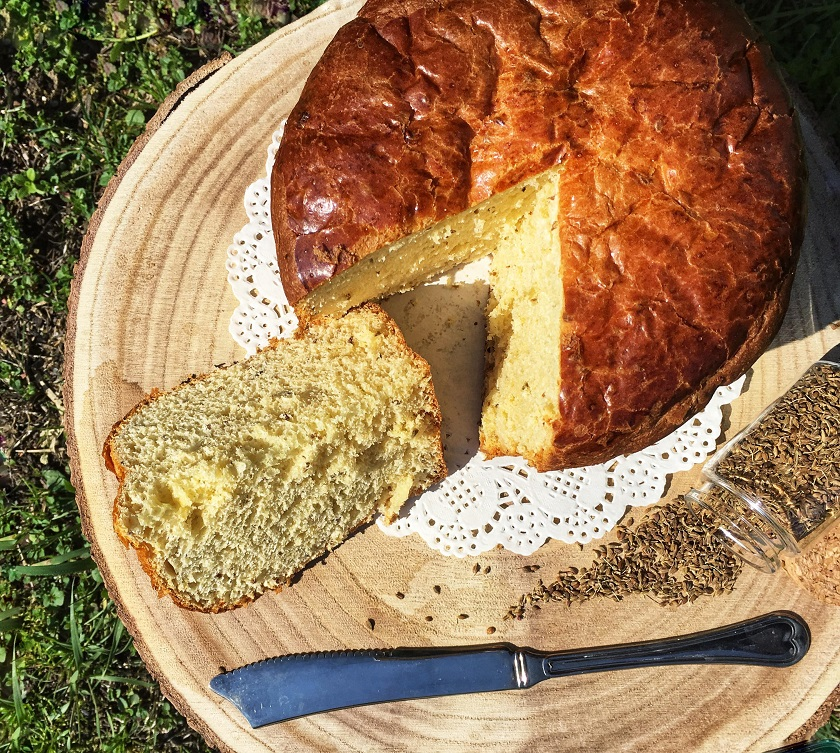
In Tuscany, we have a unique sweet tradition called “la Sportellina” or “schiacciata di Pasqua” (literally, the Easter squashed bread). It may sound funny for a cake that doesn’t look squashed at all, but the name actually comes from the large number of eggs that need to be cracked (squashed) into the batter.

The countryside Easter traditions

During the old days, Lent was a time of fasting and repentance, so people relied on homemade products. This was a common and deeply religious tradition, especially in the countryside. Most peasant families’ meals consisted of soups, polenta, vegetables from their own farm, or homemade bread and freshly picked herbs. Occasionally, adding a pilchard in oil was a special treat that not everyone could afford. So, it’s no wonder that on Easter, people indulged in abundant dishes and plenty of meat, generously accompanied by a glass or two of good wine!

Food preparations typically began during Holy Week before Easter. Everything had to be produced in large quantities to be shared with families and neighbors as a symbol of gratitude and celebration.

As a child, I remember a lively atmosphere in our town. People would go up and down the alleys from early morning until sunset. I could sense Easter approaching just by catching a whiff of the air. Suddenly, I was enveloped in the delightful aroma of aniseed and freshly baked cake, coming from the town’s wood-fired oven. Back then, household appliances were rare, and not everyone could afford an oven. So, during the Easter rush, when women prepared numerous oven-baked goods, they would rush up and down the main street with their kneaded doughs, waiting for their turn to use the town’s oven. Imagine the oven working tirelessly day and night, baking hundreds of pans of traditional delicacies, which they would then take back home. The smell that filled the air back then was simply amazing!
tuscan-traditional-easter-cake

The origins of Sportellina cake

The connection between ancient traditions and nature is always interesting, as nothing is random. At the beginning of spring, hens laid more eggs than usual, which had to be consumed quickly due to the lack of modern storage methods. Therefore, this Easter cake, like many other seasonal cakes and dishes, was a good way to use up a significant number of eggs.

As I mentioned, our mother and grandmothers prepared this traditional cake in large quantities during Holy Week. The recipe required considerable effort and patience, given the lengthy rising and baking times. Imagine kneading and allowing the dough to rise repeatedly for at least five times before baking! This meticulous process was another reason for making the cake in large quantities. Some pieces were wrapped and given to family guests and neighbors, others were offered to the church for serving after Holy Mass on Easter Day, and a few were left for breakfast the following day.

In our fast-paced modern world, it’s challenging to imagine the time and effort required for such a lengthy and delicate preparation. Fortunately, you can easily find it at the supermarket. However, there’s something special about the experience of dipping your hands into the dough and kneading it. It’s a moment of peace and reflection, allowing your thoughts to flow freely. The sweet aroma of aniseed and mint liqueur fills your nostrils, transporting you back to your childhood. Regardless of the time it takes, the reward is immense when you see that precious piece of dough rise and turn golden brown, a testament to your dedication to preserving the tradition.


The Sportellina Recipe:

  • 1.5 kg 00 flour
  • 50 g brewer’s yeast
  • 150 ml milk
  • 7 eggs (plus 1 for brushing the surface)
  • 450 g sugar
  • 110 g extra virgin olive oil
  • 50 grams of butter
  • 50 grams of mint liqueur
  • 50 grams of maraschino
  • 15 grams of aniseed
  • 1 orange (zest and juice)


Method:

  1. First, dissolve the brewer’s yeast in the warm milk. Gradually add about 300-400 grams of flour and mix until well incorporated. Knead the dough into a ball and let it rest in a bowl for about 2 hours.
  2. After two hours, mix in 3 eggs, 150 grams of sugar, 40 grams of olive oil, and another 400 grams of flour. Let it rest again in a warm place until it doubles in volume (this time, it will take about three hours).
  3. For the third step, add in 2 eggs, 150 grams of sugar, 40 grams of olive oil, 25 grams of mint liqueur, 25 grams of maraschino, and another 400 grams of flour. Knead the dough again until all ingredients are well combined and let it rest for another 3 hours.
  4. Finally, mix in the remaining ingredients and knead the dough for a while. Then, let it rest for another 3 hours. Divide the batter into three equal parts and place them in the baking molds (we use the same molds as for Panettone). Cover the molds with a warm cloth and let them rise for 4-5 hours, or until they double in volume.
  5. Brush the top of the cakes with beaten egg and bake them in a preheated oven at 180°C for about 50 minutes, or until the surface turns brown. Let them cool in the oven for 10 more minutes before removing them.


(Note) You can store the cakes in a plastic bag in a cool, dry place for up to one week. This way, you can bake more pieces and offer them as an Easter gift to family and friends, or enjoy them as a delicious breakfast for a whole week! Enjoy!

tuscan-traditional-easter-cake-buona-pasqua

C – for Carnevale

… and other ancient Tuscan traditions

Semel in anno licet insanire” (once a year, it is allowed to act like crazy) – our ancestors used to say on February, during the most bizarre and outgoing celebration of the year.

The Carnival season is a tradition that we are carrying on since medieval times, when jesters used to run through the village, encouraging people – who were then oppressed by the system and used to live in extreme poverty – to parody the values of the society they lived in, and the authority of the severe political and religious commandments, by inverting the roles and creating the Backwards World, where they could disobey the rules and become whatever they wanted for a day, wearing the “clothes” of the character they were joking on, living in redundancy and acting like fools in the cheapest and most rumorous possible way.

This playful rebellion helped them get ready for Lent, the 40-day period of fasting and self-discipline where they’d give up meat and other practices to purify their bodies and souls before Easter. In fact, the word Carnival seems to have Latin origins, as “carne levare” or “carnelevarium” means “giving up on meat”, a practice apparently dated back to the Romans era.

To keep up with such a big commitment, people in the Middle Ages celebrated Carnival not just with jokes and feasting, but mostly by indulging in rich, greasy meals, pints of wine, and the sweetest desserts.

In Tuscany, we’re very connected to our old traditions, and thankfully, some of them are still a big part of our culture. When Carnival rolls around, local bakeries fill their counters with delicious sweet and fried treats, along with the traditional Tuscan dessert, which still has its original Renaissance recipe. We’re talking about the Berlingozzo (berlinˈgɔttso), a soft, moist, and flavored donut cake with one of the easiest and simplest recipes ever, just like our grandmothers used to make!

Origins of the name

This carnival dessert, disguised as a breakfast donut, used to be served on Fat Thursday, which in Florence was the day known as Berligaccio. This funny word, was the name of a fifteen-century Tuscan mask, used in Florence during Fat Thursday. It was represented by a mascot carried through the city’s streets, with loud shouts, colorful dances, and funny acting.

Just like “Carnevale”, it seems to have a Latin origin, from the word “berlengo,” which means “table.” This takes us back to the feasting and overindulging tradition of the Medieval period.

We also have a verb descended from it, that you can easily find in most of Boccaccio’s tales, as a proof of the ancient origins of this Tuscan custom. It’s “berlingare,” and it means to chat or talk nonsense after having a big meal and lots of wine. Giovanni Boccaccio, the local and most famous Late Medieval novelist, poet, and humanist from Certaldo, used this verb a lot in his works, especially when talking about or describing a female character, because he thought women were so gossipy about everything.

lasciamo stare l’alte e grandi millanterie ch’ella fa quando berlinga coll’altre femmine”() “Ma solamente per voglia di berlingare (…) di che ella è vaghissima, sì ben dir le pare” – Il Corbaccio (Laberinto d’Amore) di Giovanni Boccaccio

 “forget about her great bragging about (herself) she does when she chatters with other females (…) But only for the wish to chatter is she famous, even if she thinks she speaks out right” – Il Corbaccio (Laberinto d’Amore) by Giovanni Boccaccio

The Tuscan Berlingozzo

Fat Thursday is just around the corner, and after sharing all the fun things about this special time in Tuscany, we couldn’t let you go without trying some delicious Tuscan Carnival treats. As we get ready for our traditional feast next February 23rd in Certaldo, we’re excited to share the joy of making and enjoying this classic Tuscan dessert with you. So, let’s not keep talking and come to our delightful donut!

It all starts with a couple of fresh egg yolks, beaten with sugar until they’re light and fluffy, mixed with lemon zest and a splash of freshly squeezed lemon juice, some extra virgin olive oil, and a nice cup of Vin Santo, that’s the secret ingredient!

We love our Carnival desserts to be sweet and flavorful, but our ancestors didn’t have any artificial flavors back then. They simply used the ingredients they had at home, which is what makes it so special. Therefore, we follow the old ways and add our own homemade Vin Santo, a type of Italian dessert wine usually made from white grape varieties like Trebbiano and Malvasia. It’s hung and left to dry on racks in a warm, well-ventilated area. If you ever visit Certaldo or any part of Tuscany, you can taste this wonderful sweet wine with our traditional homemade almond cookies, which we serve as a dessert at the end of your meal. It’s one of our most important landmarks here, so don’t miss it!

Now, we’re adding the flour, which we’ve mixed with a bit of potato starch and a sprinkle of salt, along with a touch of baking powder. Next, we’ll gently fold in the beaten egg whites and pour the dough into a donut-shaped baking tin. Then, we’ll pop it in the oven for about half an hour to bake. That should give us plenty of time to relax and enjoy a glass of Vin Santo while getting our masks and costumes ready for the feast. Cheers!

Ingredients: berlingozzo toscano

  • 2 fresh eggs
  • 75g. Sugar
  • 1 lemon
  • 50 ml. Vin Santo
  • 50 ml. Extra virgin olive oil
  • 150 g. Flour
  • 25 g. Potato starch
  • 6g. Baking powder
  • 1 pinch of salt

What you need 

  • 20 cm. diameter baking tin

Method

  • Preheat oven to 170 C degrees
  • Bake for about 25-30 minutes

Enjoy!