Italian Cooking School

La Cipolla di Certaldo: the Sweet Red Onion of Certaldo

In the XIV century, in one of his most famous novels (VI, 10) from The Decameron, Boccaccio wrote:

Certaldo, as you may have heard, is a castle of Val d’ Elsa situated in our county, which, however small it may be, was once inhabited by noblemen and men of substance; and thither, for that he found good pasture there, one of the friars of the order of St. Anthony was long used to resort once a year, to get in the alms bestowed by simpletons upon him and his brethren. His name was Fra Cipolla (Friar Onion) and he was gladly seen there, doubtless due as much to his name, as to other reasons, for thus it was known that the soil of those fields produces onions, that are famous throughout all Tuscany.”

This is just a small evidence that Certaldo’s red onion, has been known from way back, even before the middle-ages. We’re talking about a slow food presidium and product of excellence of our territory, which you can find in two varieties: the Stantina, a round purplish onion, with succulent flesh that’s best eaten during the summer months, and the Vernina, the bright red and sour tasting type, harvested from the end of August all through the winter season, and symbol of Certaldo.

But if we look even further back, way prior to Giovanni Boccaccio’s Friar Onion, the red onion had already been adopted as a symbol of the hardworking strong spirit and sweet temper of Certaldo’s inhabitants, and thus represented on the town’s pennant. So it dominated the white side of the two-tier shield, with the motto: “By nature, I am strong yet sweet and everyone here likes me, those who work and those who sit”. However, in 1633, the Priors running the burgh, decided that it was an unworthy crest for their town, and replaced it with a rampant lion. Later, in the XIX century, the city council would have re-established the original crest that you may see today on our town’s flag.

Anyway, don’t expect to come across onions at every corner, when visiting Certaldo. Almost every farmer here grows its own, for their families’ consumption or local trading. So if you’re curious and looking for these sweet red gems, your only chances are the weekly local markets on Wednesday and Saturday, or the annual Sagra della Cipolla (The Onions’ Festival).

Since we are very proud of this marvelous product of our area, we keep the tradition alive, by celebrating it every year, with a week-long festival. It’s being held in the old burgh of Certaldo Alto, every year around the end of August, when our farmers harvest the Vernina type. Every evening, we gather together to taste the exquisite dishes prepared with the red onion, following ancient recipes that have been passed down through generations. There are people that live here, sitting together with others that came from different counties, or even tourists; banqueting, enjoying the good food and lots of Chianti wine from the local producers, accompanied by theater plays or themed performances.

Keeping the old recipes and traditions alive is the main purpose of this event, but we also like to look forward to the future generations. So on the second-last day, the festival hosts a food competition between the town’s quarters, which anticipates The Calambur: Certaldo’s medieval Palio, due to take place a few weeks later. During the food competition, every quarter has to come up with a new and creative dish, made with red onions. A committee made by people of the public gets to taste and decide on the best recipe. This year’s competition is not going to be a simple one, as they have to create a desert! I bet you’ve never thought about onions for desert, but let me tell you that you might just be surprised by the genius recipes and mixture of flavors that these people have come up with, over the years.

They’ve gone from making the ordinary soup, pasta and meat dishes with the red onions, to pickling, canning, making jam and jelly, adding them to chutneys, sweet and salted pies and even using them as homeopatic medicine, following ancient remedies left down by our grand-grand-parents. Practically, if you love red onions like we do, you can do just about anything with them!

At the Cooking School we make our most famous -handmade- Certaldo’s Red Onion Jam. It’s a family tradition, that has been taken forward for generations. It has a bitter-sweet taste and pairs perfectly with local pecorino cheese and salami, or Giuseppina’s special pork tenderloin in old-style dry marinade… to die for!

So if all this onion talking has captured your curiosity and you might want to try some onions for desert, here’s a special treat for you. It has been created and shared by Carina a friend of mine and I’m telling you: if you’re into onions, you have to try this one!

Did we get you mouth-watering yet? Then here’s the recipe for you!

Red wine caramelized onions & dark chocolate tartlets

Finely chop 2-3 sweet red onions from Certaldo and add them in a pan with a small piece of unsaltened butter and 2-3 generous tablespoons of muscovado brown sugar. Put it over low heat until softened but not brown. Add a glass of Chianti red wine, a pinch of ground cinnamon, ground cloves, a few cardamom seeds and some pink pepper granules (or any other spices you prefer). Allow the liquid to cook off and the alcohol to evaporate, and then add in a chunk of dark chocolate. Set aside and prepare your favorite recipe of shortcrust pastry. The one you see, had a touch of rustic taste, due to replacing half of the plain white flour with buckwheat flour. Blind-bake your pastry in a preheated oven, let it cool before removing it from the pan and fill each pastry case with the caramelized onions. Add some chopped walnuts and top with goat cheese creme fraiche or vanilla ice-cream. Enjoy!

Have you tried this? Post your photos in the comments below and let us know how it was!

Mercantia – A Summer Night’s Dream

“I had a dream, one midsummer night, of those you could never imagine!
A medieval hamlet was my home: the scene of old stories, fierce battles and brave men in tights.
While roaming the streets in search of some magic I got lost in a sea full of lights,
Surrounded by thousands of people and bubbles and kites, in the wonderland of no-logic.

mercantia-certaldo-street-theatre-festival

A place where nothing is what it seems: in fact, I believe I was not even there!
Where puppets were tied upside down on their strings and dancers like feathers would fleet in the air.
The strangest of creatures shown up everywhere: the angels, the witches, the mimes.
They came out of lines of unfading poetry, like frightening beasts from prehistoric times.”

mercantia-certaldo-street-theatre-festival

“No dear, I’m afraid it was not an illusion, nor was it a dream, at all.
So stunning and surreal may seem to the strangers, but it’s been this way every year,
since I can recall.
It’s the passion of artists with remarkable talent, the brilliant work of hundreds of men,
They gather together in this medieval hamlet, to celebrate Certaldo’s street theater festival.”

mercantia-certaldo-street-theatre-festival

Mercantia is Certaldo’s main summer festival, and it happens every year in July.
It lasts for 5 whole days and people gather to see the artists from all over the world performing along the streets of the old medieval town, while the master craftsmen demonstrate their brilliant ability to create unique pieces of art. It’s a celebration of peace and joy, which brings together people from all over the world, and makes them feel like they’re at home having fun with old friends.Make sure you don’t miss the next year’s edition!

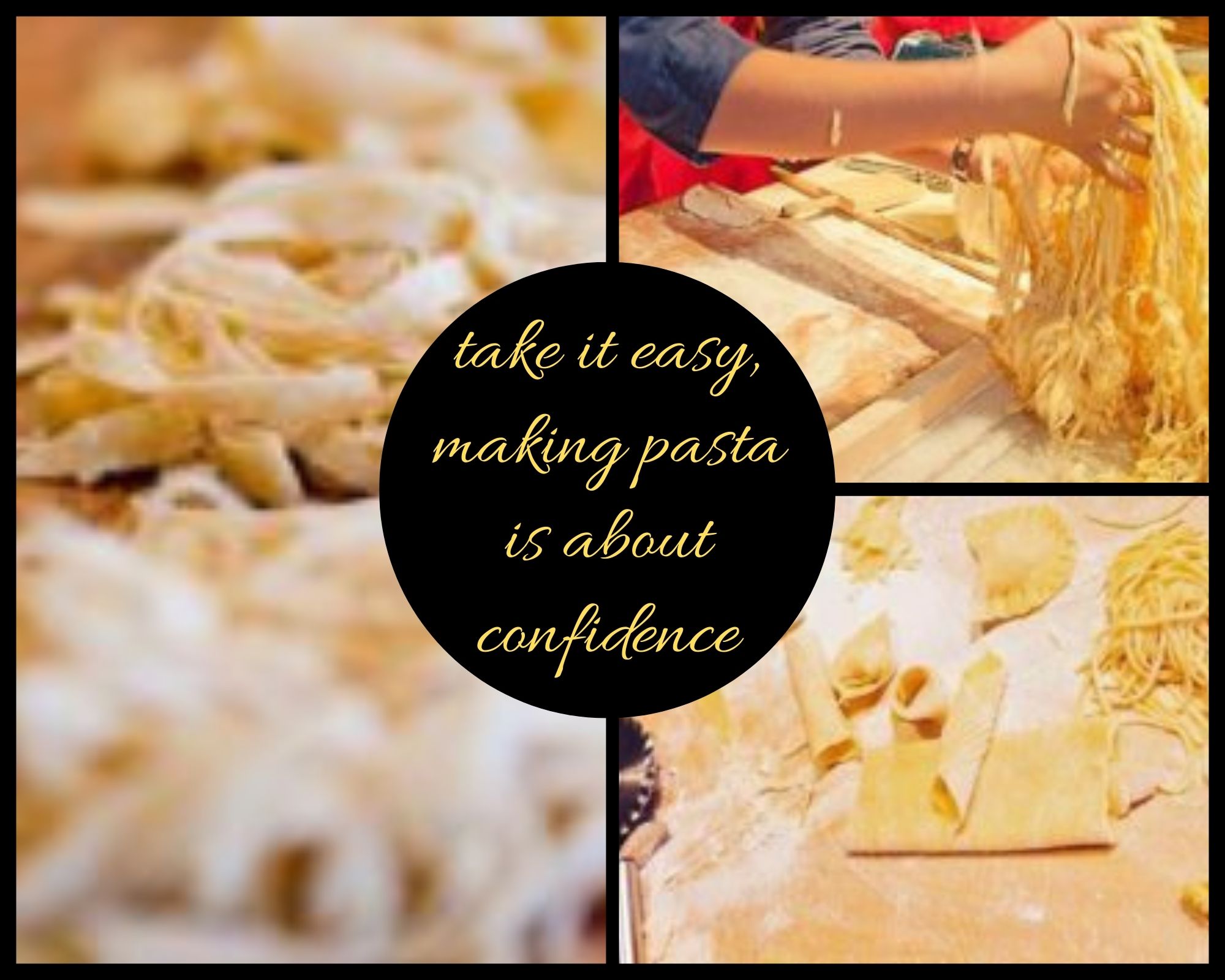
P – for Pasta: fresh, handmade & delicious

Raise your hand if you’re a homemade pasta lover!

One thing I have noticed throughout the years, is that usually making fresh pasta is the favorite part of my cooking classes for our guests. I mean, let’s admit it, everybody loves the italian-style fresh pasta, and if you’re visiting Italy, pasta is one of the reasons why you’re here! So delicious, savory and somewhat chewy, fresh pasta can be complemented with almost everything from cheese to vegetables, meat, fish and even chocolate! Plus, if cleverly accompanied by the right wine, it makes the perfect Italian meal.

It’s been decreed one of the healthiest and most nourishing dishes worldwide, as part of the mediterranean diet, so why be limited to just eating pasta at the restaurant every once in a while, when you can make it from scratch at home, whenever you wish.

Now, I know from my experience that cooking a dish of fresh pasta could sound rather intimidating for those who’ve never tried before, or have only seen it on TV. But I have some good news for you all, and according to my experience again, I can guarantee you that even a ten-year-old can do this, and you’ll never go back to buying fresh pasta again.

There’s something magic about making pasta at home the old way, that no one has yet managed to figure out. I myself have been doing it for years now, and every time I still have fun just like the old days.

It could be the marvel of feeling the dough coming together between your hands, or maybe the relaxing process of kneading and shaping, but as soon as you get your hands on and start doing it, you’d never want to stop. Then as you go, your fantasy gets lighten up and you begin experimenting all different kind of shapes and fillings for your dough, and before you know it, you find yourself inviting your friends over for a meal and getting all the compliments and “aaaw”s and “oooh”s for your fresh Italian-style dishes.

It can get really fun and become a social activity to share with your kids too; and don’t worry about the flour dust, streaked aprons and flaky bits of dough crusted on the kitchen counter. It doesn’t have to be a demanding work, so don’t loose heart if you don’t get it the first time. Just go for it and then keep trying. All you need is “an open heart and a positive attitude”, as my son Luca always says to our guests.

pasta-fresh-handmade-flour

We don’t need another pasta recipe

If you google fresh pasta you’ll find loads of recipes and every one will be different from the others, because every family has its own tradition when it comes to making pasta. So my intention isn’t just to give you one more fresh pasta recipe, but rather some helpful tips that I always share during my cooking classes.

My guests always appreciate the little tricks and tips I reveal and become more confident as they go, letting loose and having so much fun, which in the end, is the main purpose of this experience, don’t you agree?

So what’s really important is to have the right type of flour. My fail-proof recipe is based on the high-protein, finely milled “00” wheat flour, but if you have issues finding it, you can just go with the plain flour, or mix 2 parts of it with 1 part of semolina flour: this will add that slightly rougher texture that’ll help seasonings stick better to your pasta.

On a wooden or marble counter, start building a so-called “fountain” and break the eggs right in the middle, making sure they are well contained by the flour around them. Then add just a pinch of salt and a sprinkle of extravirgin olive oil. Use a fork to break the eggs and start mixing them reaaally slow, keeping everything inside the flour fountain, until everything is fully incorporated and you get a smooth uniform texture.

Now here comes the fun part! I know in modern times you may be used to getting things done quickly and with an extra help from your stand mixer, but kneading by hand is another story. It really makes you feel the dough coming together and it somehow connects you to the whole process. All you have to do is press and push with your wrist, then fold the dough over and again press and push. Just go ahead and knead it like this until it’s smooth and firm, it’ll take no more than 10-12 minutes.

Using hands gives you the chance to check when your pasta dough is ready – if you feel it’s still sticky, just dust the counter with more flour and keep kneading until firm and dry.

Another important step in making pasta, is to give your dough the necessary time to relax and loose elasticity; that’ll keep it from shrinking or pull back as you stretch it, making it easier for you to roll it flat and shape it. Let’s say about 10 minutes at room temperature, covered by a cotton cloth, should be enough. This’ll also give you the time to reorder the kitchen counter and prepare the pasta machine for shaping, or get the filling ready if you’re into making filled-pasta.

Common forms of fresh pasta have long shapes, such as tagliatelle, fettuccine, spaghetti, linguine or our specialty Tuscan pici, flat shapes such as maltagliati, or sheets for lasagna, short shapes like orecchiette, cavatelli, farfalle, trofie and filled or stuffed shapes such as cannelloni or ravioli, cappelletti and tortellini.

Of course Italy has a very deep-rooted tradition for pasta dishes, and that is why every region has its own traditional pasta shapes and names, that can be totally different from the common ones you are used to. I always suggest to search for and taste the local and regional specialties while visiting any part of Italy, because you’ll never find the same dish cooked alike from one place to another.

Cutting the pasta in the desired shape is also an important part of the process, as you have to pay attention to spread it as thinly as possible and always keep some flour handy, so you won’t get a sticky bundle instead of your tagliatelle nest… I always say to my guests, we want them to be fluffy, fluffy, fluffy, it makes them laugh a lot, but in the end is the one thing they remember the most. So to get that, you need to sprinkle some flour over the shaped pasta and then jiggle it with your hands.

When making filled pasta like ravioli, the most important trick is to press the edges well with your fingertips or a fork to seal the dough, so they won’t open while boiling. And of course, flour again to prevent them from sticking together when cooked.

If you’re not cooking pasta immediately, just let it dry on a baking sheet for a few minutes, sprinkled with flour, then fold it gently to form the nests. You can let it dry some more and then wrap it up and store in the fridge for no more than 2 days. However, I do advise you to taste it fresh, as you make it.

Cooking pasta is another important step of the process, as you need to pay attention to the time: it will only take 5-7 minutes to cook fresh pasta, unlike the dried one, which needs considerably more boiling. Dip your shaped pasta into a pot of plentiful salted boiling water and add just a touch of olive oil, so the strands won’t stick together. For fresh filled pasta, always use a gentle flame and keep the water simmering instead of boiling, so your ravioli won’t break.

One more thing that I always recommend, is to taste everything you cook; so to make sure it has reached the perfect cooking poin and has a good balance with the salt, just pick a piece of boiling pasta with a fork or some tongs, and give it a bite. Careful though, don’t get burned!

Needless to say that pasta is at its best when cooked “al dente”, so as soon as you feel it’s tender but still firm when bitten, just drain it. At this point, you should keep the sauce or chosen condiment on hand, because pasta needs to be seasoned and stir-fry immediately.

Now all you need is your family and friends gathered around the table and a good glass of wine to go with your wonderful fresh homemade pasta. Enjoy!

B – for Baccelli & Pecorino

With all this nice and warm springtime weather, people start roaming the countryside basking in the sun, away from the traffic rush, enjoying nature’s bountiful colors and sounds. This reminds me of the time when, as a child, we used to dive into the rich fields of favas, for a bellyful of these pods, risking the wrath of the farmers, for having destroyed their harvest. That’s right, because the fava beans pods were a very precious nourishment for the farmers’ cattle, but if picked up at the beginning of the season, they would make a greedy treat for us too.

I’m talking about an ancient member of the pea family, called “vicia faba” – fava beans, or broath beans or better yet “baccelli” as we use to call them here in Tuscany. Of pale green color with a slightly nutty flavor, these pods grow from late March all throughout the beginning of May.

Tuscan people are very picky about fave

It’s been proven they have been farmed since very ancient times, and have had an important part in the culture of many nations around the world. They were very appreciated in ancient Rome, so much that one of the most important noble family in the history of Romans, took their surname “i Fabi” from these pulses (vicia faba). Tracks have been found even in Troy and Crete and some say in ancient Greece, eating them was even prohibited, as the black stains on the pods were associated to death. However, their important nutritional value has been rediscovered more recently, as over time favas went from being appreciated by the wealthy class to being used for commoners and cattle feeding. Many legends have been around throughout the years on these pulses, but the most curious one that is still circulating nowadays around here, is the legend of the “leap pod”; it’s about the strange growth that favas have on a leap year. Farmers believe that on a leap year’s harvest, the fava beans inside the pods grow backwards; meaning that if you shell one, you’ll find the beans attached downward, as opposed to the stem. It’s truly just a funny legend, but you know what they say, passing on myths and legends keeps one nation’s story alive, and it can even get fun spending a lazy Sunday afternoon shelling pods to see who finds the backwards beans, on a leap year!

baccelli-fava-broath-beans

Coming back to these days, the tender fresh picked favas are a great treat for a springtime pic nic. In Tuscany we love them raw with just a pinch of salt and a drizzle of extra virgin olive oil, combined to its inseparable companion, the Tuscan Pecorino DOP cheese; it makes the perfect snack to go with a nice glass of Chianti wine.

We like them so much, we even have a one-day festival called “la baccellata” that is held in Certaldo Alto, on the 25th of April this year, and helps the local church of San Tommaso e Prospero raise funds for another important occurrence, the procession of Beata Giulia in September. During the “baccellata” day, people gather to enjoy these tasty fresh pods together with Pecorino Marzolino cheese, a Tuscan type of fresh Pecorino, that hasn’t been seasoned and blends together beautifully with favas, in a unique delight for all senses.

Another interesting way to taste your favas raw, is to make an easy and fast but very nutritious pesto out of them. All you need is 250gr of fresh shelled fava beans, a clove of garlic, 80gr of Pecorino cheese, a pinch of salt and some fresh basil leaves if you like it. Just blend everything together and then add a splash of Tuscan extra virgin olive oil, to get a creamy texture. You can enjoy this delight on a piece of toasted bread (crostini), as a side dish for meat or fish or make a generous portion of pasta: just boil it until “al dente” and stir-fry everything for one minute, adding just a drop of the boiling water if necessary. You can get creative and add some pine nuts or almonds to the mixture if you like, or just add them on top of the dish, slightly toasted.

pesto-baccelii-favas-pecorino

So our last tip is: when buying favas at the marketplace, if you’re in Tuscany ask for baccelli and if you wish to taste them raw, search for tender, firm pods with a velvety fuzz and small thin skinned beans inside, otherwise you’ll have to peel the skin off and to do so you’ll have to boil them for a few minutes.

I guess all that’s left to say is buona baccellata (happy favas day)!!!

Enjoy!

S – for Spring and Sprouts

How do we know its springtime here in Tuscany? Just saying “springtime is here” is dull and a little out-of-date, don’t you think?

Imagine yourself dozing in the warm sunshine, blessed by a breeze under a blooming almond tree, on the bright green grass carpet covering the hills of the outlying countryside of Certaldo; the small vibrant daisies, primroses and violets slowly popping out here and there, filling the air with their delighting scent, while birds’ and bees’ is the only buzz you can perceive around you. Can you picture yourself immersed into this fairy Tuscan spring scenery?

Now, I guess that’s what it takes to describe the arrival of Spring when it comes to nature’s awakening here in Tuscany, but wait! Here at Giuseppina’s Cooking School, we have one more good green reason to say “Yay springtime!

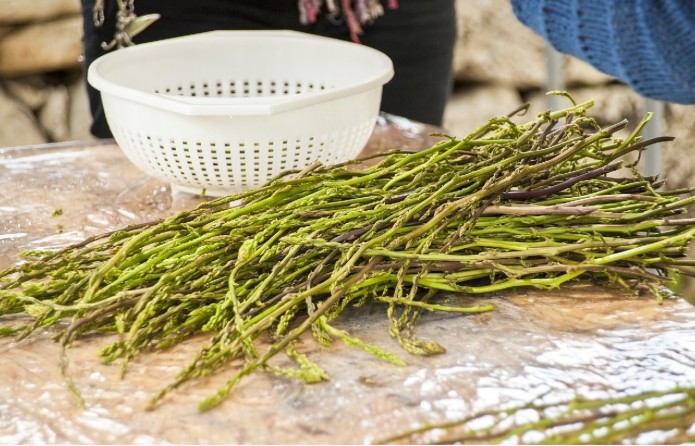
It’s when the wild asparagus sprouts pop out. The delicious and tender weed that grows abundant in the Tuscan countryside, mostly in arid environments, on open fields that haven’t been farmed in a while, or wherever there’s a cluster of trees. Its unique taste has been accompanying our great Tuscan culinary tradition since ages, and its multitude of uses in the kitchen have been passed on through generations in our family.

However, don’t get tricked by the name: wild asparagus sprouts are nothing like their cultivated peers, the common asparagus you can easily find at the greengrocers’. In fact, unlike the thick and woody sprouts of the common asparagus, the wild one is almost as thin as a grass blade, with a slightly bitter and pungent taste. Grandma’ always said “where there’s one there are hundreds”, and truly it is so, as wild asparagus grows rampant in big thick clusters, that we usually call “asparagiaie”.

As you may already know, we are passionate about keeping our traditions alive, so this is the time of the year, when we’re very likely to gather on Sundays, put on some rubber boots and go hiking in the woods, in search of this nature’s delicacy. Sometimes we even have fun making up a competition and whoever fills up their basket first wins, leaving the looser to do the grunt work, like cleanse and cook the spoils for all of us once home. It’s a really fun way to spend some time with family or friends, and bring home freshly picked goods for a meal.

The best way to eat it?

But what to do with a great amount of such an exquisiteness, you might be wondering; well, as much wild sprouts we might have gathered in our baskets, it’s hardly ever enough. We enjoy this bounty in many different ways, from eating them raw – freshly picked – or just seared, with a drizzle of olive oil, black pepper and salt, to dipping them into poached eggs; combine them with the classic pasta, and a generous sprinkle of Parmesan shavings or add them to a beaten egg or two, and with the right seasoning enjoy an exquisite Italian omelet with just a splash of fine balsamic vinegar.

We could say there are as many recipes to experiment, as the sprouts of an asparagus cluster. However, we kept the best for last, because there is one particular dish that has been in our family for decades, and keeps inspiring us: it’s the smooth, creamy risotto con gli asparagi – Giuseppina’s signature dish when it comes to wild asparagus – and the reason we go crazy about wild sprouts hunting every year! Believe me, once you’ve had a taste of this beautiful spring dish, you won’t ever get enough of it. It’s nothing like the same old risotto you’re used to, it’s just so scented and delicate, yet distinctive and savory. Giuseppina holds tight to her family tradition recipe of course, and you can only experience this live in her kitchen; but there’s one hint about it I’m going to share with you though: I know you may find this unusual, but she never adds wine to simmer her wild asparagus risotto! Curious isn’t it?!

C – for Carnevale

… and other ancient Tuscan traditions

Semel in anno licet insanire” (once a year, it is allowed to act like crazy) – our ancestors used to say on February, during the most bizarre and outgoing celebration of the year.

The Carnival season is a tradition that we are carrying on since medieval times, when jesters used to run through the village, encouraging people – who were then oppressed by the system and used to live in extreme poverty – to parody the values of the society they lived in, and the authority of the severe political and religious commandments, by inverting the roles and creating the Backwards World, where they could disobey the rules and become whatever they wanted for a day, wearing the “clothes” of the character they were joking on, living in redundancy and acting like fools in the cheapest and most rumorous possible way.

This rebellion would help them prepare for the forthcoming Lent season – the austere 40 days of Lent during which they had to abstain from eating meat and follow other ascetic practices, in order to purify their bodies and souls before the Easter festivity. In fact, the word Carnival seems to have Latin origins, as “carne levare” or “carnelevarium” means “giving up on meat”, a practice apparently dated back to the Romans era.

In order to be able to carry on such a commitment of great sacrifice, the Middle Age people would celebrate the Carnival not only by joking and feasting around, but mostly by overindulging on substantial and greasy meals, pints of wine and the sweetest desserts.

In Tuscany we are very bound to our ancient traditions, and fortunately some of them are still an important part of our cultural heritage. When the Carnival festivity comes up, local bakeries fill up their counters with greedy sweet and fried holiday treats, together with the traditional Tuscan dessert, which to this day has kept its original Renaissance recipe. We are talking about the Berlingozzo (berlinˈgɔttso), a soft, moist and flavored donut cake, with one of the quickest and simplest recipes ever, just like our grandmothers used to do it!

the origins of the name, there is always a reason.

This carnival dessert disguised as a breakfast donut, used to be served on Fat Thursday, which in Florence was the day known as Berligaccio. This funny word, was the name of a fifteen-century Tuscan mask, used in Florence during Fat Thursday, and represented by a mascot carried out in effigy through the city’s streets, among the loudest shouts, most colored dances and funny acting.

Just like “Carnevale”, it seems to have a Latin origin as well, from the word “berlengo” which means “table”; this takes us back to the feasting and overindulging tradition of the Medieval period.

We also have a verb descended from it, that you can easily find in most of Boccaccio’s tales, as a proof of the ancient origins of this Tuscan custom. It’s “berlingare” and it means to chatter, or to blather about things with no sense, right after having had a substantial meal and several pints of wine. Giovanni Boccaccio, Certaldo’s local and most famous Late Medieval novelist, poet and humanist, used to make great use of this verb in his works, mostly when talking about or describing a female character, as he would associate it to women’s being so gossipy about everything.

lasciamo stare l’alte e grandi millanterie ch’ella fa quando berlinga coll’altre femmine”() “Ma solamente per voglia di berlingare (…) di che ella è vaghissima, sì ben dir le pare” – Il Corbaccio (Laberinto d’Amore) di Giovanni Boccaccio

 “forget about her great bragging about (herself) she does when she chatters with other females (…) But only for the wish to chatter is she famous, even if she thinks she speaks out right” – Il Corbaccio (Laberinto d’Amore) by Giovanni Boccaccio

The Tuscan Berlingozzo

This year’s Fat Thursday is approaching, and after telling you all about this special time of the year here in Tuscany, we couldn’t just leave you there craving for a taste of some Tuscan Carnival treats. As we’re preparing for our traditional feast – next 23th of February – here in Certaldo, we want to share with you the joy of preparing and having a byte of this typical Tuscan dessert. So let’s not “chatter” any further and come to our nice and cheerful donut.

It’s all about a couple of fresh egg yolks, beaten with some sugar until pale, mixed with lemon zest and a tablespoon or two of freshly squeezed lemon juice, some extravirgin olive oil and a nice cup of Vin Santo – now this is the secret right here!

We like our Carnival desserts to be sweet and flavored, but our ancestors didn’t have any artificial flavors at the time; they simply used the home-made products they had, and that’s just what makes it so special. So following the ancient customs, we add in our Tuscan traditional home-made directly-from-our-vineyard Vin Santo: a type of italian dessert wine, usually made from white grape varieties such as Trebbiano and Malvasia, hanged and left to dry out on racks, in a warm and well ventilated area. If you ever come to Certaldo or anywhere near in Tuscany, you can have a taste of this marvelous sweet wine, together with the Cantuccini – our traditional home-made almond cookies, served as a dessert, at the end of your meal. It’s one of our most important landmarks around here, don’t miss it!

At this point, we just pour in the flour, mixed to some potato starch and a pinch of salt, together with a bit of baking powder. Then gently incorporate the beaten egg whites and pour the dough into a donut shaped baking tin, and into the oven, to bake for about a half an hour… Just enough time for us to sit and sip a nice glass of Vin Santo, while preparing our mask and costumes for the feast. Cheers!

Ingredients: berlingozzo toscano

for a 20 cm. diameter baking tin

2 fresh eggs

75gr. Sugar

1 lemon

50 ml. Vin Santo

50 ml. Extra virgin olive oil

150 gr. Flour

25 gr. Potato starch

6gr. Baking powder

1 pinch of salt

Preheat oven to 170 C degrees

Bake for about 25-30 minutes

Enjoy!

V – for vineyards

 “While Nature Awakens” – behind the scenes

Every January is a new beginning here at Giuseppina’s Cooking School; as the nature awakens, we are preparing for a whole new year, load of great new recipes, delicious home-made preserves and fine tasty Chianti wine directly from our vineyards.


There’s a great buzz in the air around here, and as Giuseppina is preparing to welcome and delight her guests this season, with new kitchen tricks and tips about her Tuscan recipes, we’re about to kick off with preparing our vineyards for a new great harvest year of fresh, marvelous wine that will go beautifully with our local cuisine dishes.

Harvest is just the final act of a long year of hard working and caring

And because Nature can’t wait, the moment is right for us to cuddle our vines so that they will give us back their best rewards. It is a moment of great devotion, and attention given to the process of the vine’s new vegetative growth, the same as we would give to one of our home-made pasta dishes or bread. We start off by “kneading” the soil just enough so it can breathe out after a long cold winter; next, we add in the “spices” (winter fertilizer) that will help the vine’s heart grow its best harvest, giving the wine just that perfect mix of tastes that makes Chianti wine world wide famous and appreciated. At this point we are almost done, and we start trimming the vine, restoring it to keep the growth shape. It’s probably the most important part of the work, because keeping a clean shaped vine means a richer harvest; as an old saying states, once a vine said to its owner:

fammi povera e ti farò ricco

(Keep me poor -of unwanted trims- and I will make you rich -of the best grapes-).

The vine is abundance, is love for the land in the shape of a grape and it takes a great passion and perseverance to produce the best wine possible, by making the most of the amazing properties that the land of Chianti has to give.

The wine-harvest and tasting is just the final act of a year-long process of hard work and caring, that we are going to share with our guests, making them go beyond the scenes, further than the popular tourist attractions, the simple wine tasting or just a local visit to the vineyards.

We stay out in front and give them the real deal about growing the Chianti vines, together with making them a real part of the story.

modif.1

B – for bread

Saturday kneading

Winter time is the period for indulging in the joys of country life.

That’s why Sunday is the day for bread baking. good bread that lasts an entire week. Our sourdough was resting in a jar by the fireplace since last weekend, as a sly cat, nothing but flour and water fermented.

Saturday evening, It’s time to wake our natural yeast and by adding flour and warm water we start kneeding, about six kilos will be the quanity for our family, but we always consider a little extra that is eaten in front of the oven when baking.

Sunday is fast approaching and our dough go back near the fireplace, rest and rise all night. Natural rising, without yeast, require more time but we do not hurry and we can say goodnight to our dough.

Sunday baking

Buongiorno!  not a big breakfast today, the feast will come later, so after a good espresso , while starting the fire in the oven, the dough is shaped into loaves, folded one last time and those little ones will rise again for a couple of hours, during this time the top of the oven will become withe, the temperature is right, we can remove the fire and embers, clean the surface and start baking.

All of the loaves have to fit inside or will be wasted, the teperature is enough for one only batch, this is a delicate step, it need to be done gently but quickly as the oven have to be sealed as soon as possible.

After one hour the magic happen, as the smell comes out of the oven, curious people will comes out of their homes to get a taste.

Buona Domenica!